6L Smart Humidifier: Warm & Cool Mist + Alexa (60H)
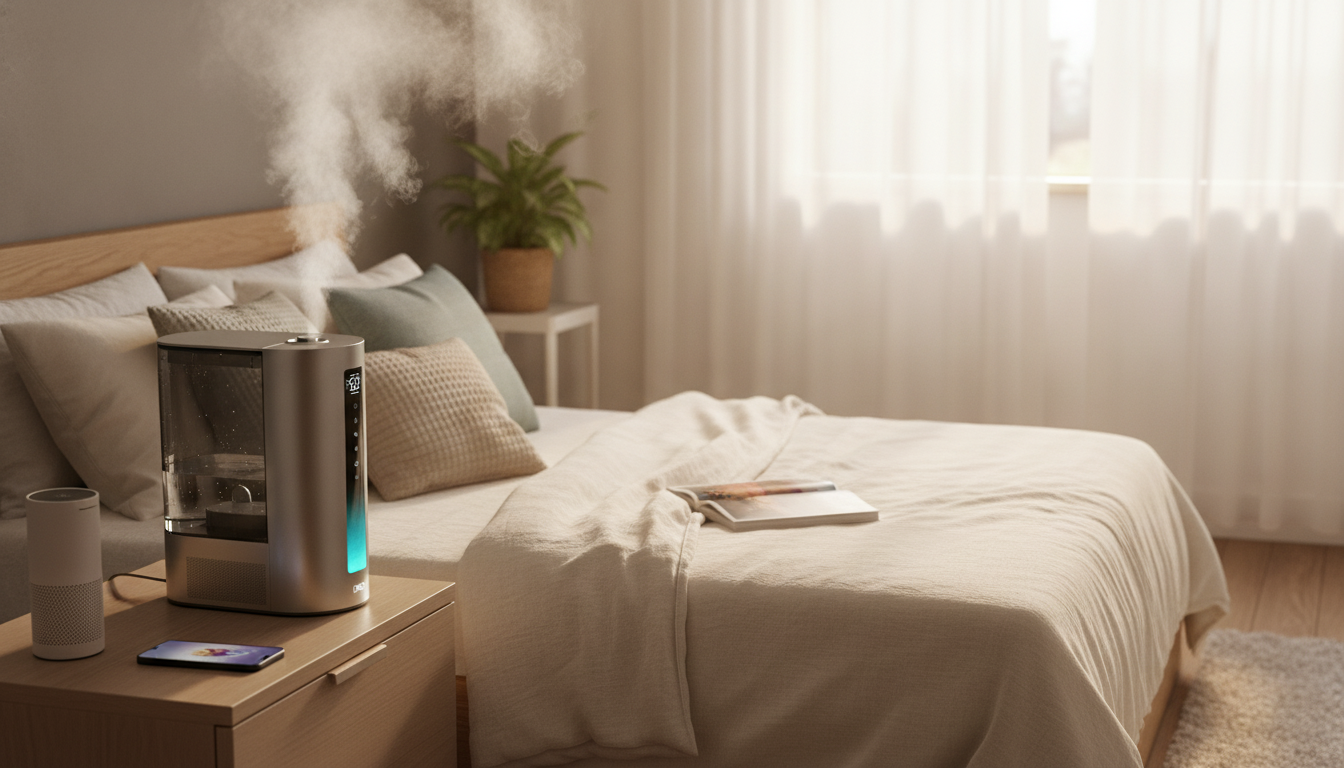
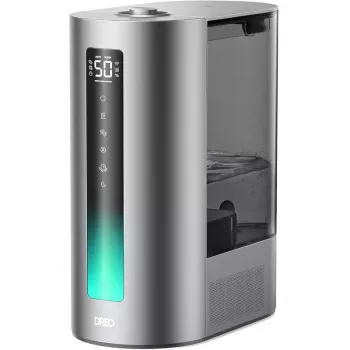
6L Smart Humidifier with Warm & Cool Mist (60-Hour Run Time) with Alexa Compatibility
Dry indoor air can aggravate congestion, dry skin, and static—especially during heating season. A 6L smart humidifier that offers both warm and cool mist gives you year-round flexibility, while long run time and voice control reduce the daily “refill and fiddle” routine. Below is what to expect from a warm/cool smart model, how to set it up for steady performance, and how to keep it clean and safe.
What this humidifier is designed to do
A large-capacity smart humidifier is built for consistent comfort across everyday spaces—bedrooms, living rooms, nurseries, and home offices—without constant refills. With a 6L tank, it can run through the night (and often beyond) depending on your output setting and room conditions.
- Provide steady moisture output with fewer refills thanks to the 6L tank.
- Switch between cool mist for routine comfort and warm mist for a cozier feel in colder months.
- Enable hands-free control with Alexa compatibility and app scheduling for routines like overnight operation.
- Support sleep-friendly use when paired with sensible humidity targets and stable placement away from walls and electronics.
Warm mist vs. cool mist: when each mode makes sense
Both modes raise indoor humidity, but they “feel” different and fit different situations.
- Cool mist: Best for daily maintenance, warmer climates, and energy-conscious use. It usually feels neutral in the room and is commonly preferred for long overnight runs.
- Warm mist: Helpful when a room feels chilly or when you want a quicker perceived comfort boost. Because heated components may be involved, safe placement matters more.
- Seasonal approach: Use cool mist in spring/summer and warm mist in fall/winter—then fine-tune based on your room’s temperature and humidity readings.
- Safety reminder: If warm mist uses heating elements, keep the unit out of reach of kids and pets and allow it to cool before moving or refilling as needed.
Key specs at a glance
Capacity, run time, and controls determine whether a humidifier feels like a daily chore or a “set it and forget it” appliance.
| Feature | What it helps with | Tip for best results |
|---|---|---|
| 6L water tank | Fewer refills and steadier overnight humidification | Refill with clean water and keep caps/seals seated to prevent leaks |
| Up to 60-hour run time | Long stretches of use on low/medium output | Once comfortable, reduce mist level to maintain rather than overshoot |
| Warm mist mode | Cozier feel in colder rooms; can feel faster to notice | Place safely away from children/pets; don’t aim mist at furniture |
| Cool mist mode | Comfort in most seasons; typically lower energy than heated mist | Use a hygrometer (or reliable built-in reading) to avoid over-humidifying |
| Alexa compatible | Hands-free on/off and routine scheduling | Create bedtime and morning routines aligned with sleep and wake times |
If you want a smart model with both mist options and extended run time, see the 6L Smart Humidifier with Warm & Cool Mist, 60-Hour Run Time, Alexa Compatible.
Smart control: Alexa routines that are genuinely useful
The most helpful routines are the ones that prevent swings—too dry at bedtime, too damp by morning.
- Bedtime routine: Start humidifying 30–60 minutes before sleep, then drop to a lower output once the room stabilizes.
- Wake-up routine: Turn off (or reduce output) shortly before you get up, which can help reduce morning window condensation in cold weather.
- Allergy/comfort routine: Run at a moderate setting during the day, then pause during cooking or showering when indoor humidity may spike.
- Child/pet safety routine: Keep placement consistent (stable, out of reach) and use voice control so you’re not moving the unit frequently.
Placement and room setup for consistent humidity
Where you place a humidifier can matter as much as what model you buy. Bad placement can cause damp spots, uneven humidity, or condensation.
- Set the unit on a flat, water-resistant surface with a few inches of clearance from walls for better air mixing.
- Do not aim mist directly at bedding, curtains, wood furniture, books, or electronics.
- For more even distribution, place it closer to the center of the room rather than in a tight corner.
- Adjust output based on measured humidity, not just visible mist.
If you’re setting up a child’s room or play space and want to keep airflow and placement predictable, a defined area can help—such as positioning the humidifier away from where kids play and sleep. For a cozy, separate play nook, consider the Kids Teepee Tent with Windows (place the humidifier outside the tent to avoid concentrated moisture).
Comfort targets: avoiding air that feels too dry or too damp
For guidance on managing moisture and reducing mold risk, see the EPA’s resource on moisture control: A Brief Guide to Mold, Moisture and Your Home. Good airflow also matters; the CDC’s overview of building ventilation is a helpful companion reference: Ventilation in Buildings.
Cleaning and maintenance for better air and fewer headaches
Noise, sleep, and nighttime use
Who this model fits best
FAQ
Is warm mist safe to use around kids and pets?
Warm mist can involve heated components, so place the unit out of reach on a stable surface and avoid directing mist toward people. If your model heats water, allow it to cool before moving or refilling when applicable.
How long will a 6L tank actually last?
Run time depends on mist level, room size, humidity loss, and whether warm mode is used. Low settings can last much longer than high output, so use humidity readings to find the lowest effective setting.
How can white dust be reduced on surfaces?
White dust is usually caused by minerals in hard water. Using distilled or demineralized water, cleaning scale regularly, and maintaining any filters per instructions can significantly reduce it.






Leave a comment