Cactus Floor-to-Ceiling Cat Tree: Adjustable Tower
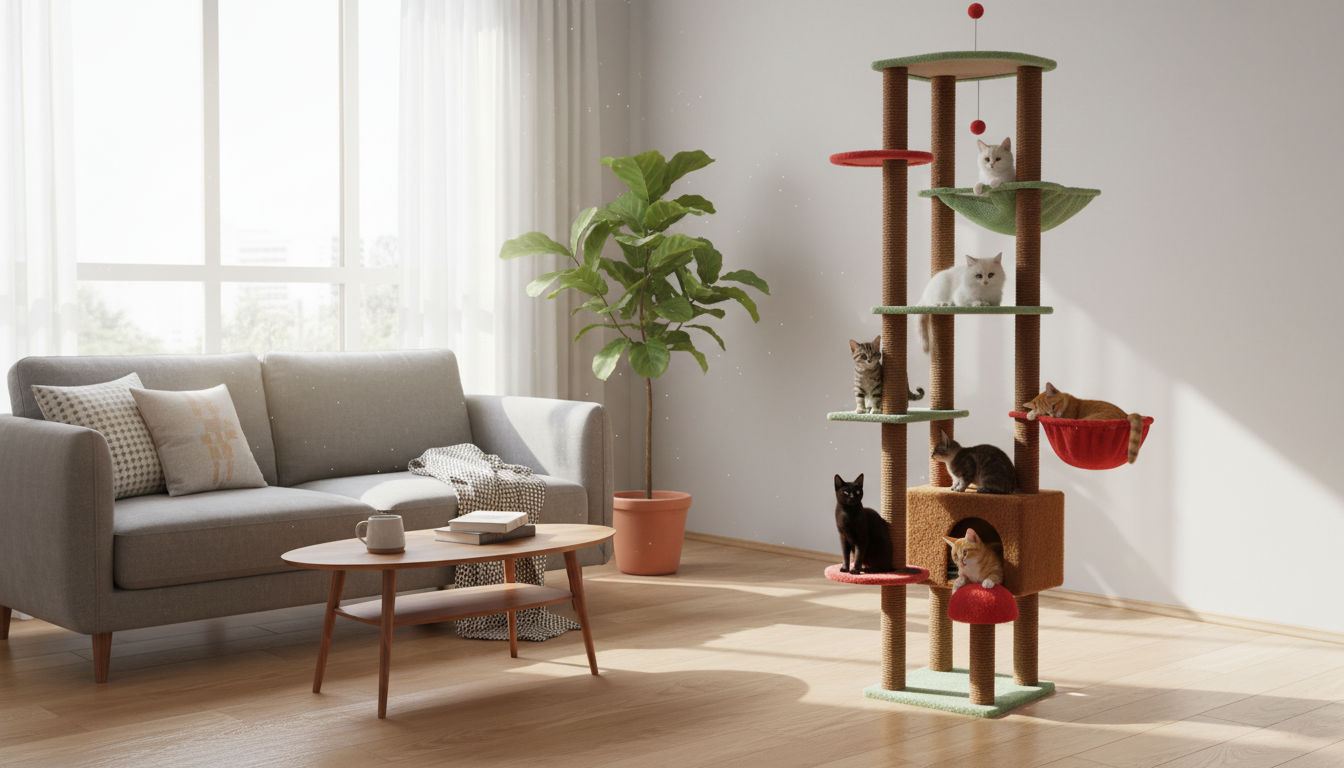
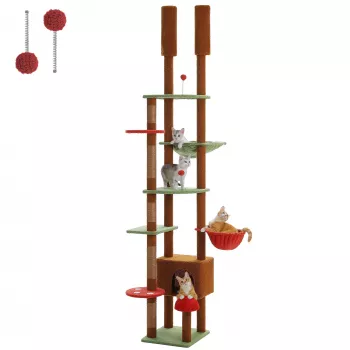
Cactus Cat Tree Floor to Ceiling Adjustable Cat Tower
A floor-to-ceiling cat tower turns unused vertical space into climbing, scratching, and lounging territory. With an adjustable tension design, this cactus-style cat tree is built to fit different ceiling heights while giving cats a tall, secure perch for play and rest. For households short on floor space (or cats that love to supervise from above), a vertical tower can become the “main hub” that keeps activity centered and clutter under control.
What a Floor-to-Ceiling Cat Tower Adds to a Home
Cats are natural climbers, and height often equals comfort. A tension-mounted tower creates a safe route upward without eating up the room like bulky, wide cat furniture.
- Creates vertical territory that helps cats feel secure without taking up much floor space
- Encourages natural behaviors like climbing, perching, and scratching in one dedicated zone
- Can reduce furniture scratching by giving a clear, appealing alternative
- Works well in apartments or multi-cat homes where floor space is limited
Animal welfare groups frequently highlight the value of providing cats with environmental outlets—especially climbing and perching options—so they can express normal behaviors indoors. Helpful references include International Cat Care guidance on environmental needs and general cat care resources from the American Veterinary Medical Association (AVMA).
Key Features to Look For in an Adjustable Tension Tower
Not all floor-to-ceiling towers feel the same once your cat starts leaping between levels. These features make a big difference in everyday use and long-term safety.
- Adjustable height range: It should match the room’s ceiling and still allow enough extension for a firm fit.
- Stable base and pole structure: A wide base and solid main pole help minimize wobble during energetic jumps.
- Multiple platforms: Platforms spaced for comfortable climbing are especially helpful for kittens or less agile cats.
- Scratchable surfaces: Sisal-wrapped or similar scratch zones should be placed where cats naturally reach and stretch.
- Easy-to-clean perches: Materials that wipe down easily help manage fur, dander, and the occasional mess.
Cactus Design: Style Meets Enrichment
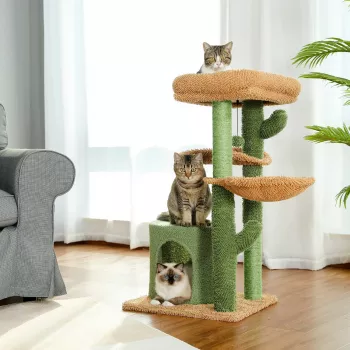
A cactus-inspired tower adds personality while still acting like classic cat furniture. The shape can make the tower feel more like a “feature” than a utility item, which helps it blend into living rooms, bedrooms, or home offices.
- Playful cactus look that works with modern, boho, or novelty decor themes
- Distinct perches and shapes can keep cats engaged with different lounging angles
- A tall profile supports window-adjacent placement for birdwatching and sunbathing
- Helps create a dedicated “cat zone” that’s easier to keep tidy than scattered toys
If your cat is new to tall perches, consider a gradual introduction: lure them up with treats, place a favorite blanket on a mid-level perch, and keep play sessions short at first. Over time, the tower becomes part of the daily routine—especially if it’s near the spots your cat already likes to hang out.
Sizing and Placement Tips for a Secure Fit
Floor-to-ceiling towers depend on correct measurement and a solid installation spot. A few small placement decisions can make the tower feel dramatically sturdier to your cat.
- Measure exact height: Measure floor-to-ceiling where the tower will sit; account for baseboards and ceiling trim.
- Use a flat surface: Avoid thick rugs if they make the base uneven or compress under weight.
- Pick a confidence-building spot: Near a wall or in a corner often feels more stable for climbing cats.
- Leave jump clearance: Make sure cats can launch and land without hitting shelves, curtain rods, or nearby furniture.
- Window safety: If placed by a window, secure blinds and cords to prevent tangling hazards (the ASPCA cat care resources are a useful general reference for safe home habits).
Comparison Checklist: What to Confirm Before Buying
Before choosing an adjustable tension tower, it helps to verify the basics—especially if you have a larger cat, multiple cats, or ceilings that aren’t standard height.
| Item to check | Why it matters | What to do |
|---|---|---|
| Ceiling height range | Ensures the tension pole can lock in securely | Measure floor-to-ceiling and compare to the tower’s adjustable range |
| Base stability | Reduces wobble and tipping during jumps | Confirm base size suits the space; use a flat surface |
| Scratch surfaces | Protects furniture and satisfies scratching needs | Choose a tower with accessible scratch posts and durable wrap |
| Platform layout | Supports comfortable climbs and lounging | Check perch spacing for your cat’s mobility and size |
| Placement spot | Improves daily use and confidence | Pick a corner/window area with safe jump clearance |
Care, Cleaning, and Long-Term Use
Cactus Cat Tree Floor to Ceiling Adjustable Cat Tower: Product Snapshot
Shop In-Stock Picks
- Cactus Cat Tree Floor to Ceiling Adjustable Cat Tower — a vertical, tension-mounted climbing and scratching hub for space-smart cat homes.
- Kids Teepee Tent with Windows — a fun, enclosed “hideaway” style space that can work as a cozy indoor nook for supervised pet lounging or quiet-time retreats.
FAQ
Will a floor-to-ceiling cat tower damage the ceiling?
Tension-mounted towers typically distribute pressure between the floor and ceiling without drilling, but they should be installed on a solid, flat surface. Follow the instructions carefully, avoid fragile ceiling tiles, and re-check tightness periodically to prevent shifting.
How do you choose the right height for an adjustable cat tower?
Measure floor-to-ceiling height at the exact spot where the tower will be installed, accounting for trim or uneven flooring. Choose a model whose adjustable range comfortably covers that measurement so it can lock securely without overextension.
Is a tall cat tower suitable for older cats?
Many senior cats still enjoy height if the climb feels gradual and secure. Look for closer platform spacing, consider placing a step or ottoman nearby for easier access, and watch for any signs of joint discomfort or hesitation.







Leave a comment